7 min read
Put Spring Radishes Under Mesh and Pull a Test Root
Build a cover you can open quickly, then compare short sowings for leaf damage and root texture before the weather turns hot.
On this page
When a row of spring radishes first comes up, the leaves can seem to change overnight. Small holes may appear across the earliest leaf blades, while the roots are still weeks away from being ready. Fine mesh gives you a chance to keep insects out during the vulnerable stage if you fit it before they arrive. Make the opening easy to reach, because you will still need to thin the plants and check the roots. You can use the same covered space for two small sowings and compare what each one produces as the season changes.
This is a project for a quick garden radish, typically a compact round or short-rooted cultivar. Long types such as daikon have different root depth and spacing needs. Use the seed packet to define the crop you expect and the size you want at harvest. The purpose of the cover is to protect young foliage from incoming insects. Flavor and root quality will also depend on temperature, moisture, spacing and timing. Look below the cover rather than expecting it to correct everything happening in the bed.
Put the cover over a manageable piece of ground
Choose a site that receives good light during the cool part of your growing season. Prepare loose soil a little deeper than the crop will need. Break down hard lumps in the shallow seed zone without treading the soil into a crust. Clear large roots and stones. An open structure helps small seedlings emerge and makes a test root easy to pull. In a bed that commonly dries into a hard skin, settle the soil with water before sowing rather than trying to arrange and thin seed after the first heavy wash.
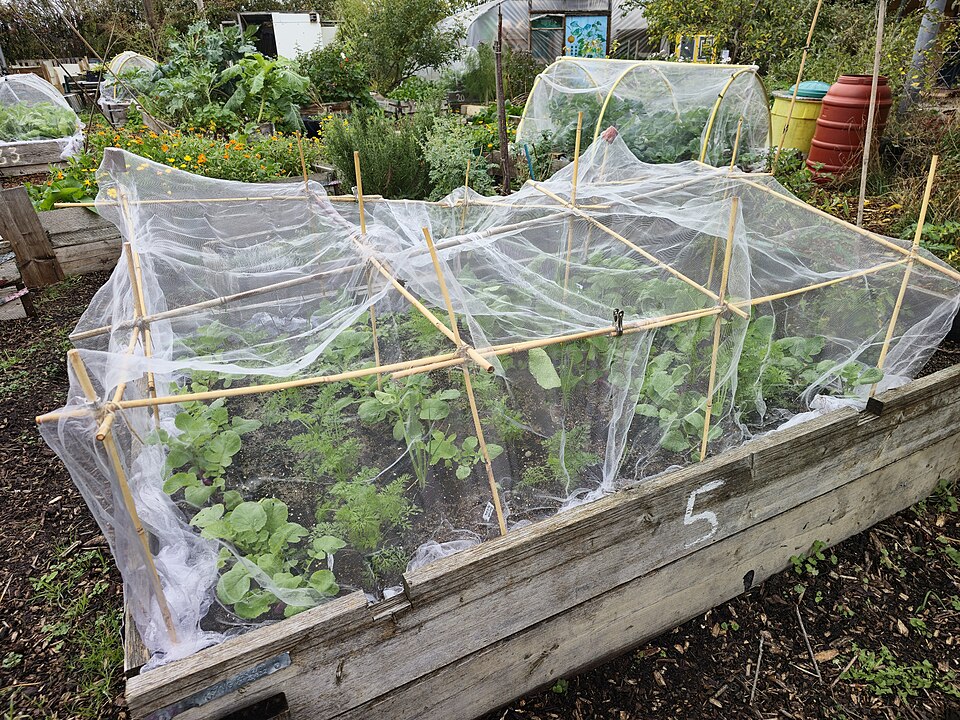
Use a few hoops and fine insect mesh sized to cover the area, including the edges. Fittings should be stable and easy to lift safely. Keep enough height for leaves to expand without pressing into the mesh. A path along the main side lets you open the material for a quick job and restore it promptly. If the only way to reach your short row is to dismantle every edge, you will be more likely to leave the cover loose after thinning. A few easy-to-replace weights or other suitable fasteners can make access simpler.
Choose a bed where incoming flea beetles are more likely to be outside than already under the cover, accounting for previous cropping and local conditions. A cover cannot exclude a beetle that it has trapped inside. Rotate crops where practical and inspect the young plants during the first few visits. In spots close to blown litter or rapidly drying soil, check after wind. A tiny exposed gap at the bottom may make more difference to insect access than a broad well fitted top.
Sow short batches when the weather is cool
Direct sow small garden radishes in a locally suitable cool period. In temperate gardens, an early spring sowing works once the soil can be handled, and later cool windows may be useful. Hot conditions can push plants toward flowering or less pleasant texture. Follow the cultivar's depth and spacing guidance. A depth of about a quarter to half an inch is a reasonable starting range for many small types. Leave the future thinning room when you prepare the second strip. Keep the two dates clear on separate labels.
Put the cover in place promptly after sowing. Raise the mesh on hoops so it will not rub on new leaves and secure the full perimeter. Feel the weather and soil under it for the first time on a bright day. Fine insect mesh and other covering materials can differ in warmth and airflow. Choose material appropriate to the temperatures you expect rather than relying on a heavy frost layer all the way into a warm spell. Use equipment suitable for the pest you mean to exclude and keep it in sound condition.
Choose the date for a second batch only after considering whether the season is still on your side. A short interval can spread the harvest when soil temperatures are steady. If the second sowing follows a cool first one into much warmer weather, it may need different attention, and it might catch up sooner than expected. Leave a place for a new row rather than assuming you must fill it immediately. A small trial is enough if the goal is to compare how the roots develop at the change of season.
Thin quickly and check what you can see
When seedlings are large enough to distinguish, open one side of the cover and leave only the space you need for the job. Thin the little plants to the recommended size. About two inches, or five centimeters, can suit a small round radish, while larger roots need more room. Remove weeds while you can see the row, and avoid pulling against a young plant that you want to keep. Close the mesh promptly once you finish and check the perimeter at the two places you lifted it. The plants will be easier to water and monitor with an untangled cover.
Small irregular holes in young leaves can indicate flea beetle feeding. Look for actual jumping beetles and the pattern of current damage before taking that as a confirmed identification. Other causes may produce leaf damage too. Note whether holes are on the oldest leaves only or whether new leaves are being damaged. Healthy larger plants may tolerate limited feeding. If damage is increasing under otherwise tight screening, look for a missed opening or insects that were present when it went on, and consult local horticultural guidance if necessary.
Keep root moisture steady. Feel the soil beneath the surface and water thoroughly when it needs it, where practical without removing the entire cover. Stop and look if a fast pour runs out of the raised bed or if water remains in a low pocket. Uneven moisture can contribute to splitting, and dry conditions can make the roots rough or bitter. A fine top layer and an accessible water source make it easier to give the crop a steady growing period.
Pull one root rather than guessing from leaf height
Inspect the shoulder of a plant in the older sowing. Compare it with the listed usable diameter for the cultivar. Lift one average plant and test its root. A vigorous leaf canopy can still hide slender or poorly developed roots. A small radish can be ready within roughly three to five weeks in suitable conditions, but weather and variety shift the timing. Slice a clean sound root and see whether it has the crisp texture you were hoping for. Use that information for the next several plants rather than waiting for every root to reach the same size.
If a test root is starting to lose its texture or tastes much stronger than expected, take a few sound roots sooner from the neighbors. Prolonged heat and delayed harvesting can make a once useful row less pleasant. Look for rising flower stems as well. The crop is most useful before it has devoted its energy to flowering. If the second batch is still small, check the soil and light before expecting it to mature in exactly the same number of days as the first.
Take usable roots carefully and keep them out of the sun. Follow normal handling for washing and chilling produce. Once the last roots are gathered, clear the bed and pick up the cover, then let it dry before storing. Note what happened near the openings and around the younger section. A well fitted cover should leave you with enough access to harvest even when the roots of the two batches are ready at different times.
When it is time to test a second root, mark the place it came from. Ends and edges dry differently, and a variety may make a perfectly good root in one part of the bed and a strong one where the soil dried sooner. A sample from the same middle stretch in both sowings gives you a useful comparison if light and spacing were similar. Bring the roots indoors separately and inspect them before mixing them with other produce. Keep a note of the day after sowing, but add a short description of the weather. That gives next year's harvest timing more context than a date on its own.
Keep the better of the two windows
Write down which row produced sound roots with mild flavor and how much leaf damage you saw. If both batches had healthy leaves and only the late one produced rough roots, look first at weather and moisture. If the earliest plants were damaged while the cover was loose, repair that part of the setup before moving the whole operation to another bed. You can use next year's first row to repeat the better conditions. Measure the harvest by the roots you actually cut and used, and keep the mesh simple enough that you can inspect the crop when it needs you.
Further reading: University of Minnesota Extension guide to growing radishes.